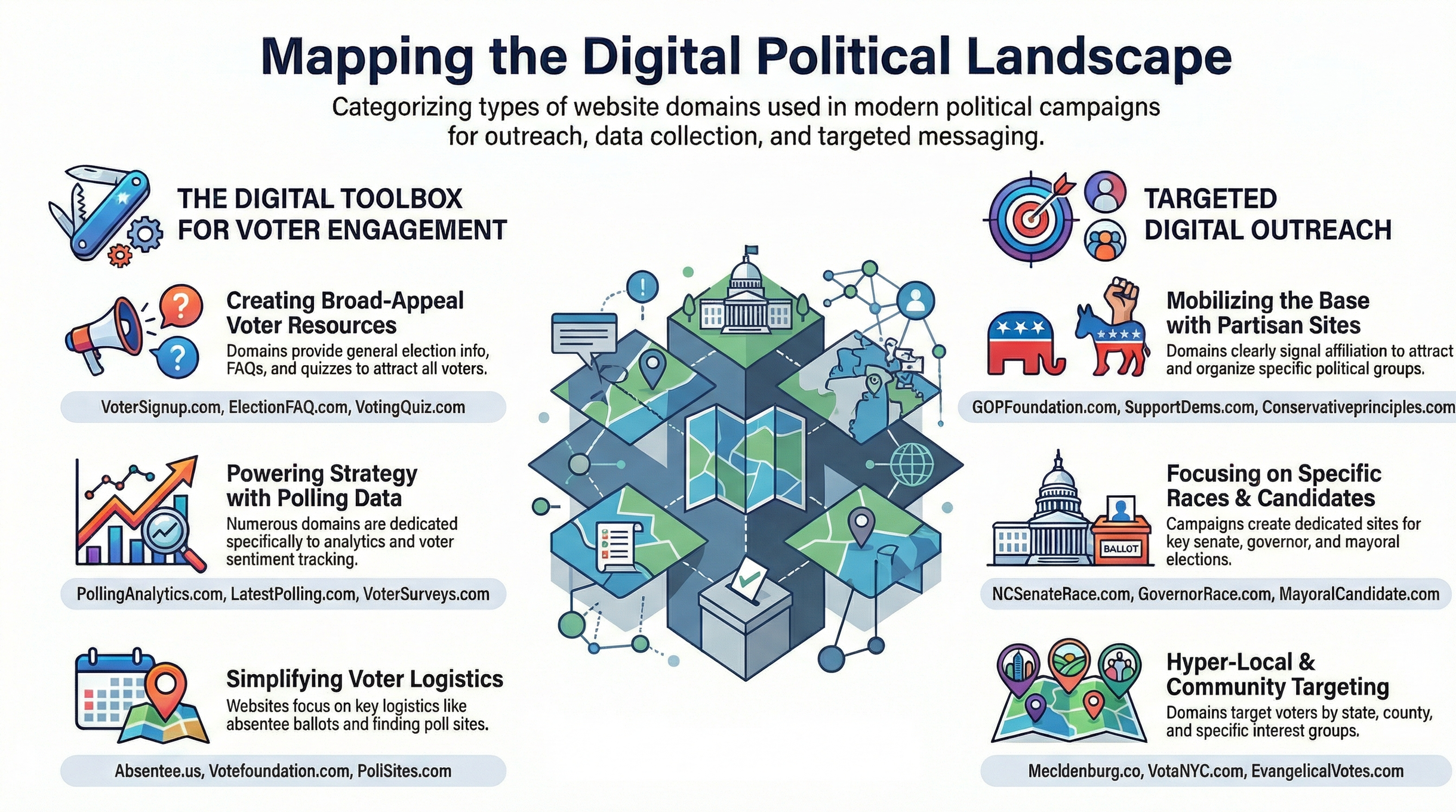
A future-proof ecosystem designed for organizations, campaigns, and platforms seeking to influence, inform, or administer the American electoral process. This portfolio functions as permanent digital infrastructure, anchoring high-intent search traffic across the most critical phases of the political lifecycle summarized through 4 strategic pillars.
The last decade has made one thing clear: in high-leverage election cycles, control of authoritative domain names can matter as much as paid media. Two documented transactions from Georgia politics illustrate how and why election-related domains evolve from digital real estate into strategic infrastructure.
In January 2021, GeorgiaRunoff.com was sold ahead of the twin U.S. Senate runoff elections that ultimately determined control of the United States Senate. According to public disclosures, more than $435 million was spent on political advertising surrounding those races, making them the most expensive congressional elections in U.S. history. VPN.com, which brokered the transaction, described the sale as “the most politically influential domain name sale of the decade,” emphasizing that the buyer used the domain to host non-partisan voter information during a period of unprecedented national attention.
Several years before that, in 2018, during the 2018 Georgia gubernatorial race, the domain BrianKemp.com—matching the sitting Secretary of State and gubernatorial candidate—was owned by a political opponent and redirected to adversarial content. A Georgia state lawmaker ultimately acquired the domain through VPN.com to prevent voter confusion and reputational harm
National Infrastructure: Unlike a state-specific domain, this functions as a "gateway" for all 50 states. With $5 billion specifically projected for House and Senate races alone, the demand for a centralized primary results and tracking hub is at an all-time high.
Early Spending Surge: As of early 2026, over $900 million has already been spent on political ads, pacing well ahead of all previous cycles. This early liquidity means organizations are looking for established assets now rather than waiting for the June primaries.
Political Premiums: Historically, candidates have paid significant sums for digital real estate; for example, Rand Paul's campaign paid $100,000 for a domain over a decade ago when total cycle spending was a fraction of what it is today ($1.2.9).
Market Rarity: Generic two-word .com domains that describe a core civic function are finite. As major media conglomerates and political tech firms consolidate, the "replacement cost" of a domain like StatePrimary.com is effectively millions in long-term SEO and branding value.


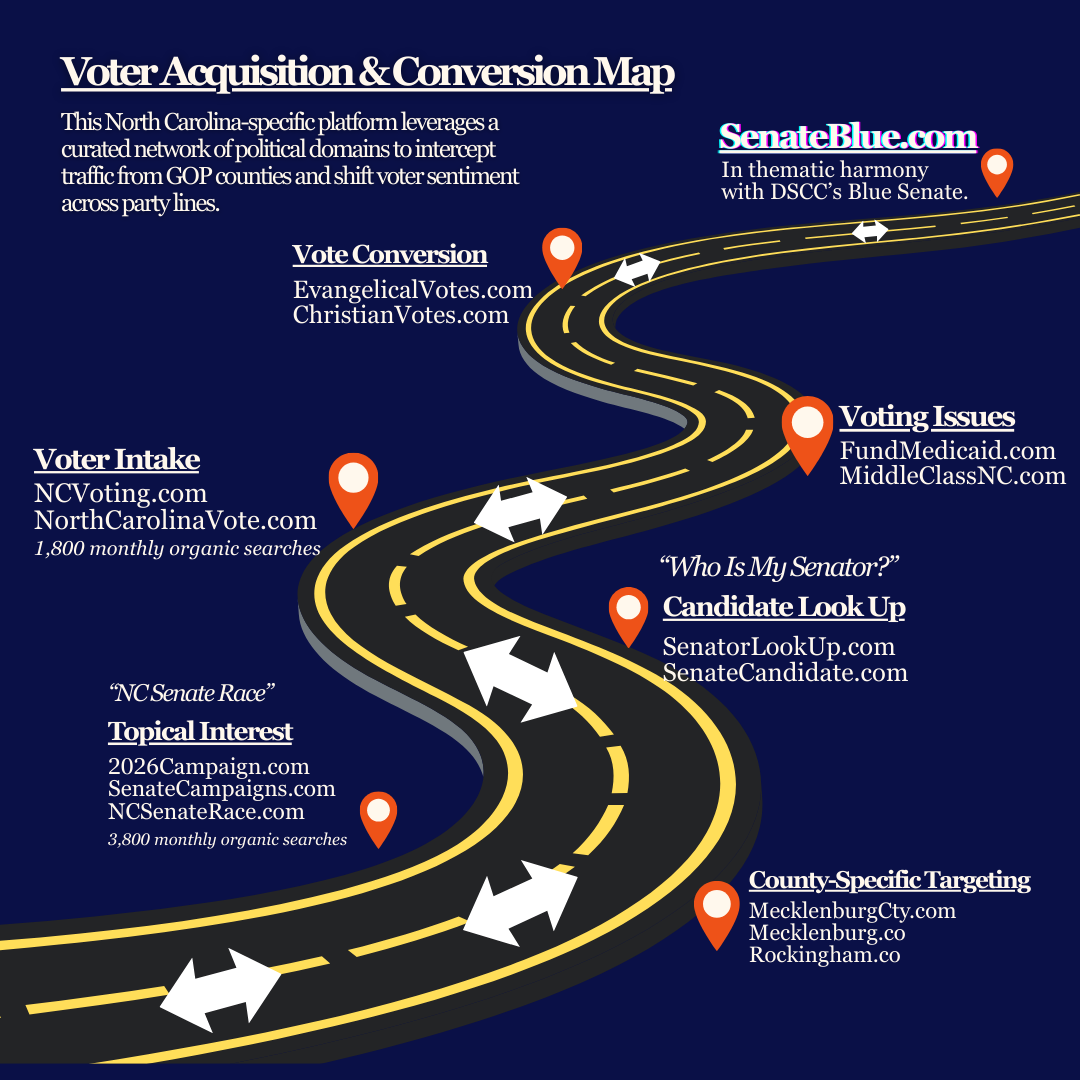

















Comprehensive Industry Coverage
This portfolio unites the entire vertical of political activity: voting rights, campaign infrastructure, and election oversight. PoliticsCoverage.com, ElectionFAQ.com, and LatestPolling.com, provides an immediate, broad, and authoritative home for comprehensive political reporting and analysis at national, local, and state levels.
Strategic Choke Points
The cluster controls the "digital front door" to the electoral process by capturing inevitable search intent. Anchored by high-authority assets like ElectionCertification.com and VoterCertification.com, the portfolio controls the digital gateways for the administration and verification of election result. Domains like ElectionLitigation.com position the owner at the center of the legal challenges and oversight that have become standard in modern electoral cycles.
Instant Economies of Scale
Acquiring this cluster provides a ready-made digital platform that eliminates the "valuation drag" of fragmented political branding. It serves as a naming and SEO backbone that enables instant credibility and scalable entry into political media and advocacy. This collection represents the linguistic real estate that competitors cannot replicate, ensuring your platform is the one voters instinctively find first. Think of this election cluster as the "Command and Control" center for a national highway system; you aren't just one driver on the road, you own the maps, the signage, and the toll booths that every voter must pass through to reach their destination.